

In this cash-strapped economy, phones and laptops are getting even more expensive, and Apple just launched a new way for customers to use its new products at a lower cost –– as long as you are willing to lease them.
Under Apple Upgrade, consumers can lease an iPhone, iPad, Apple Watch or Mac for monthly payments backed by Klarna, so it’s easier to get these Apple products than at full retail price upfront.
For example, you can now lease a 13-inch MacBook Air that retails starting at $1,299 for $24.99/month for 36 months, or an iPhone 17 Pro that costs at least $1,099 for $31.99 for 24 months. Apple had a similar iPhone upgrade program, but this expands the service to more Apple products.
After a lease is up, people can either upgrade and return their device, quit the program and return their device or buy the device outright with a one-time payment.
So what’s the catch? Using a newer Mac laptop model for a low monthly price is an enticing deal for consumers, but you should understand the total costs of what you’re signing up for. There are a few downsides when you enter into this kind of yearslong lease, according to finance experts.
Apple Upgrade Is Safer Than Some ‘Buy Now, Pay Later’ Plans – But You Should Be Cautious
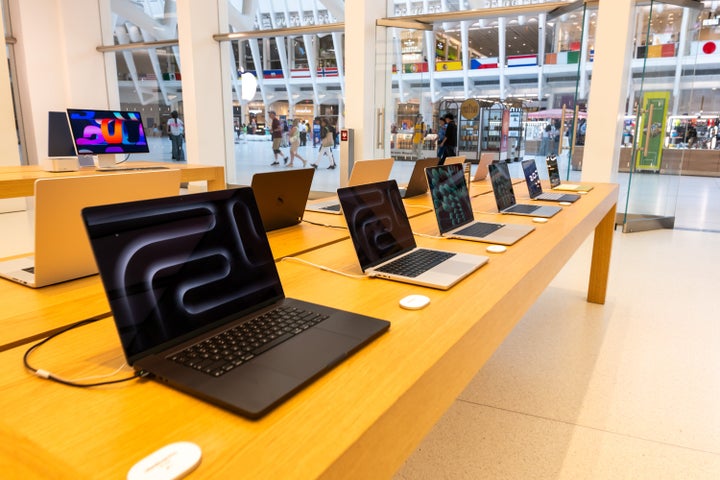
Spencer Platt via Getty Images
Know that joining the Apple Upgrade program is not a special discount. It doesn’t save you money if you want to keep the phone you leased, because you still need to pay a final purchase fee — so your total costs will still equal the full retail price of the device. What is helpful about Apple Upgrade is how it spreads out payments with interest-free financing.
Unlike some “buy now, pay later” loans for concerts that break up payments into smaller installments, this upgrade plan doesn’t charge additional upfront fees, which can put consumers on the hook for high interest rates. In a standard Klarna loan, a missed payment can result in interest fees of up to 36%, but missing one Apple Upgrade payment would just add it to your next month’s bill.
“I’m much more in favor of using credit to buy a big-ticket item like this, as opposed to small everyday things where you’re racking up lots and lots of individual loans,” said Ed deHaan, a professor at Stanford University’s Graduate School of Business who researches the effects of BNPL loans. DeHaan said he could imagine students using this to get a good MacBook for programming classes, for example.
To Make This A Good Deal, Stay On Top Of Monthly Payments
It certainly benefits Apple to incentivize you to stay within its product ecosystem. “It just makes it more likely that you’re going to be upgrading every two years,” deHaan said. “From Apple’s perspective, if they can get people to upgrade their phones more often than they otherwise would, that’s more revenue for them.”
But to know if it really benefits you is to be real with yourself about whether you can maintain these monthly payments. “We don’t tend to think about this future version of ourselves that’s going to be paying this debt,” said certified financial planner and money psychology expert Hanna Horvath. “We want access to this thing now.”
This Apple Upgrade program is a long-term lease, and you could incur a fee if you decide to terminate your lease early. That fee will be the total cost of your remaining unpaid monthly lease payments, according to Apple. And yes, you can lease an iPhone and a MacBook at the same time, but just because you can lease multiple Apple products at once doesn’t always mean you should.
When you start having multiple monthly payment installments for different loans, you can quickly get in over your head. DeHaan has found that BNPL users are more likely to rapidly experience bank overdraft charges and credit card interest fees than people who don’t use these loans.
Renting A Laptop Over Owning It Can Change How You Value It
You should also do price comparisons to see if the Apple Upgrade is worth it for your situation.
Reselling and upgrading your device can be more cost-effective than getting a brand-new iPhone, said Arthur Shi, a battery expert and electrical engineer for iFixit, a website that allows people to share tech user manuals and sell parts for do-it-yourself repairs.
“IPhones and Mac devices last much longer than two years and are relatively easy to repair and refurbish. Hardware upgrades have slowed in recent years, meaning new models aren’t substantially better,” Shi said. “Additionally, Apple is good at keeping up with software updates for older devices. I used my iPhone 12 Pro Max for five years, replaced the battery twice, and sold it for much more than Apple’s trade-in value. When I upgraded, I purchased a last-year-used iPhone 16 Pro Max. I’m very happy with it.”
Apple’s upgrade leases are also not eligible for military, education or veteran discount programs. If you have an existing Apple device, you can also trade it in to lower your monthly lease payment. Check out Apple’s trade-in chart to see how much Apple could pay you for your device.
And one last thing: If you break it, you still have to pay for your device. Apple said it needs the device in “good working condition” at the end of your lease term. Apple Upgrade doesn’t automatically include AppleCare+ — the company’s repair service — so if you accidentally break your phone, Klarna will charge you a damage fee.
And that might be more likely to happen to a product you rent over own. “You have a fundamentally different relationship to an item when you own it versus rent it,” Horvath said. “You care about it more, you take care of it more, you oftentimes value it more.”
But if you need a certain Apple product immediately, this lease might make sense. For too many people, everyday tech products feel increasingly out of reach. Citing rising costs of memory and storage chips, Apple raised the prices of the iPad and MacBook earlier this summer, so that some MacBook Air and MacBook models went up by $200 and $300.
That’s why leasing a newer Apple laptop or phone could be a financially savvy move right now — as long as you don’t fall behind on your payments.
Before you introduce a new loan, look through your finances and “get a sense for how much wiggle room” you have in your budget, Horvath said. “Maybe that’s a sign that you need to reevaluate how you’re spending.”

