


Choke Points
Lost time. Lost jobs. Lost friends. Lost family.
Lost Lives.
How Israeli checkpoints suffocate Palestinian life in the occupied West Bank.
Illustration: Hokyoung Kim
Choke Points
Lost time. Lost jobs. Lost friends. Lost family. Lost lives. How Israeli checkpoints suffocate Palestinian life in the occupied West Bank.
Illustration: Hokyoung Kim
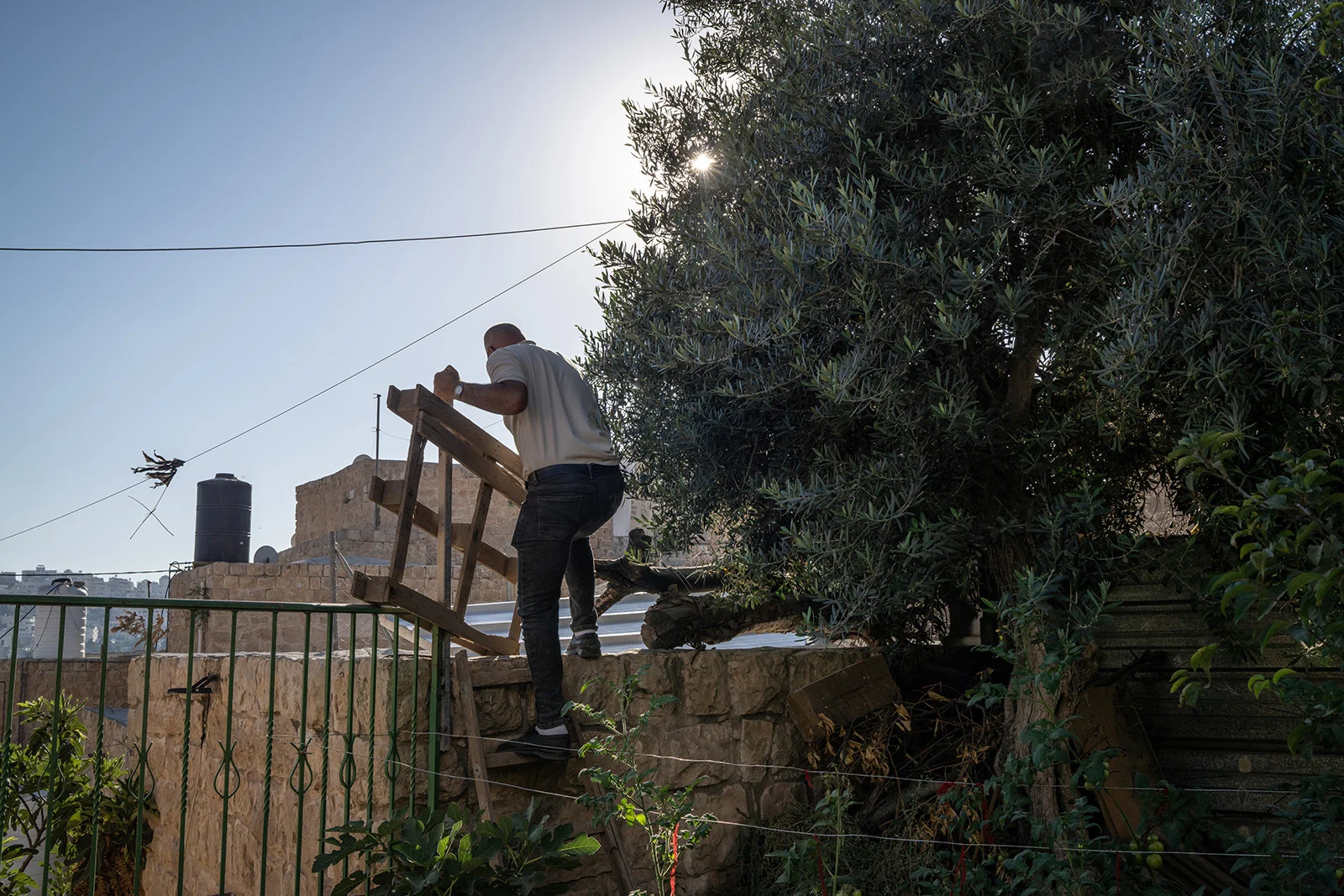
Aref Jaber is on a neighbor’s roof, trying to get home.
At 51, he is clambering over a wall into the next backyard, up onto the next roof, along the line of stone houses that stand between him and his own front door. He has no choice. Alleys and side streets in his neighborhood have been sealed with cement blocks and barbed wire, and a single point of access, called Checkpoint 160, is the only way in or out for the 140 families who live there.
But Checkpoint 160 is closed again; Jaber is not sure why. The whim of a soldier, a crash in the scanning system, breaking news in the region—it could be anything.
For the last three years, he says, this has happened at least two days a week. So the community has devised a system of alternative routes. Jaber calls his neighbors to ask if he can come through. They check their windows for soldiers, and then Jaber scales ladders and traverses roofs. “When I finally get home,” he says, “it feels like I’ve achieved something monumental.”
The enclosure of Jaber’s neighborhood is a dense microcosm of what life is becoming across the occupied West Bank—for Palestinians, that is. At the same time that deadly Israeli settler violence robs communities in the West Bank of their land, and amid the genocide in Gaza, Israel has expanded its infrastructures of military control and domination.
Since 2023, Israel’s fragmentation of Palestine, underway for generations, has accelerated. The West Bank has, for the nearly 3.5 million Palestinians who live there, ceased to exist as a contiguous territory. According to the most recent UN data from December 2025, at least 925 fixed and temporary checkpoints, metal gates, roadblocks, and earth mounds divide the West Bank. (A Palestinian governmental commission reported this month that the number is now 942.) This fracturing has torn families apart, stifled the economy, and obstructed access to essential services such as hospitals and schools.
Israel has never publicly listed the checkpoints it operates, their staffing hours, or their closure times. On the ground, Google Maps is practically useless for Palestinians; it is blind to the checkpoints and tries to route drivers onto roads reserved for Israeli-plated cars. Instead, citizens have developed their own ad hoc networks to inform each other of closures.
As far as we know, no organization has used that network—combined with new datasets and on-the-ground reporting—to measure what this does to daily life.
Over 18 months, WIRED, Lighthouse Reports, Arab Reporters for Investigative Journalism (ARIJ) and the Palestine Reporting Lab investigated the system that has carved the West Bank into cantons and measured what it cost people to move through it.
We analyzed tens of thousands of Telegram messages Palestinians sent to navigate daily checkpoint delays and closures
Working with the Institute for Social and Economic Progress (ISEP), a Palestinian research organization, we polled hundreds of people across the West Bank to find out how checkpoints shape their lives.
Israel has never publicly listed the checkpoints it operates, their staffing hours, or their closure times. On the ground, Google Maps is practically useless for Palestinians; it is blind to the checkpoints and tries to route drivers onto roads reserved for Israeli-plated cars. Instead, citizens have developed their own ad hoc networks to inform each other of closures.
As far as we know, no organization has used that network—combined with new datasets and on-the-ground reporting—to measure what this does to daily life.
Over 18 months, WIRED, Lighthouse Reports, Arab Reporters for Investigative Journalism (ARIJ) and the Palestine Reporting Lab investigated the system that has carved the West Bank into cantons and measured what it cost people to move through it.
We analyzed tens of thousands of Telegram messages Palestinians sent to navigate daily checkpoint delays and closures.
Working with the Institute for Social and Economic Progress (ISEP), a Palestinian research organization, we polled hundreds of people across the West Bank to find out how checkpoints shape their lives.
We mapped 2.6 billion GPS pings of drivers navigating the roads and closures.
Then, we manually verified over 800 movement obstacles using satellite imagery and on-the-ground reporting. (Explore and download the full map of checkpoints we verified here).
- 174 Earthmounds
- 126 Closed road gates
- 115 Roadblocks
- 91 Checkpoints
- 74 Open road gates
- 69 Partial checkpoints
- 63 Road barriers
- 44 Partial checkpoints (closed gate)
- 40 Partial checkpoints (open gate)
- 26 Earthwalls
- 9 Trenchs
- 1 Flying checkpoint
- 3 Other/no data
The number of movement obstacles in the West Bank rose by more in the past three years than it did over the previous 18.
- Obstacles in 2023
- Obstacles added 2023-2025
The average West Bank commuter—someone who drives several times a week—loses about an hour and a half each week to additional travel time in an effort to avoid checkpoints. Over the course of a year, that amounts to 77 hours lost.
For some, the delays are far longer. People going from Ramallah to Al-Eizariya, on the edges of Jerusalem, could do so in 27 kilometers/48 minutes. Instead, it’s 45 kilometers/100 minutes.
Our data shows that people have to take all sorts of complex routes to avoid checkpoints.
Anyone who commutes four days a week from Ramallah to Hebron is robbed of over 12 extra hours of travel time.
One pair of towns, Anabta and Beit Lid, are 8 kilometers apart.
It used to be a 10 minute drive. It now routinely takes 50 minutes each way.
SATELLITE IMAGE ©2026 VANTOR
Our data analysis found that checkpoint delays have increased by more than 50 percent in the aftermath of October 2023, frequently exceeding hours at a time.
Together, Palestinians in the West Bank lose about 30 years every day.
Data can count the checkpoints, clock the closures, and tally the hours lost at the gates. But how does the system upend the life of a single family?
Losing Access to an Education
More than a decade ago, Amal and her family left the US. They moved back to a home in Al-Janiya, where they built a house with a garden, and a mountain view. “Mashallah,” she says of it still. (The names have been changed due to safety concerns.)
By the time the family arrived, Al-Janiya’s main entrance had already been closed for over a decade. Israel sealed the eastern road in 2003; it now serves as an entrance to Talmon, an Israeli settlement built on the village’s land.
Every day that Dana and Lina drive to their universities, they each lose about an hour on the circuitous route and at checkpoints. Over the course of an academic year, they have lost about three days each due to the detours.
“You loop and loop and end up at the same point… I swear, I get dizzy… By the time you arrive, you’re just sad. You sit there asking yourself: what is this life?” Amal said. “You can take it once. Twice. For a year. Then it crosses some limit and you can’t.”
Thirty percent of people in the West Bank said that checkpoints have prevented them from starting or completing a university education. Most students living outside major cities cross at least one checkpoint on the shortest route to their nearest university.
Last summer, Amal’s family decided they couldn’t spend another academic year in Al-Janiya, and they moved near Ramallah. “We grieve leaving our village,” Amal said, “but it’s not really a choice.”
They join more than one in ten people in the West Bank who say they’ve moved to other cities or regions because of checkpoints, along with 31 percent who say they’re considering moving for the same reason.
An Inheritance of Loss
Roads that once tied Palestine together have been closed off again and again, first by militarized borders and barriers, then by permits, and finally by hundreds of checkpoints.
Khalil Tufakji, a Palestinian cartographer and expert on Israeli settlements, has watched Israel assemble this system for decades. The purpose of checkpoints is the fragmentation of space, he said—“every city closes in on itself”—and in this way, the homeland shrinks to a city.
The system that confines Palestinians was built in layers. Under British colonial rule, Palestinian communities were at times subjected to roadblocks, systemic and capricious searches, border barriers, and a system of permits that restricted who could move by vehicle across the territory.
May 1948: Nakba
1948
In 1948, in what is known as the “Nakba” or “catastrophe,” Zionist forces expelled more than 750,000 Palestinians from their homes. Hundreds of villages were depopulated or destroyed, and people were driven into exile.
Those who remained were placed under Israeli military rule for the next 18 years, forbidden to work, trade, study, or seek medical care beyond their towns without an Israeli permit.
Jun. 1967: Six-Day War
1967
In 1967, when Israel seized the remaining Palestinian territories, it reconstructed the same permit system there. Palestinians were sorted into categories, the color of an ID card determining who may go where.
Dec. 1987: 1st Intifada
1988
In 1988, UN Special Committee reports classified the closing of areas in the occupied territories as collective punishment.
1995
In 1995, the Oslo Process resumed. It was meant to lead to the establishment of a sovereign Palestinian state. Instead, it further fragmented Palestinians by dividing the West Bank into administrative islands.
Sep. 2000: 2nd Intifada
2002
By the early 2000s, this system of closures and permits had become the status quo. In 2002, Israel started building the 713-kilometers-long separation wall, 85 percent of which runs through the West Bank.
2007
And since 2007, Israel has imposed a blockade on Gaza, isolating it from the rest of Palestine.
Oct. 2023: Oct. 7th
2023
In the years that followed, the restrictions intensified.
This has meant that every generation of Palestinians since 1948 has inherited a smaller world than the one before it. Grandparents in Jenin, a city in the northern West Bank, tell stories about driving to have lunch in Jerusalem or a weekend in Beirut.
Parents from West Bank towns mention visiting Gaza. Their children remember school trips to Jericho’s ancient sites, to an amusement park in Tulkarm and to the zoo in Qalqilya. Most people in the West Bank today have never been to Gaza, according to the ISEP poll. Over 40 percent of respondents said they had never seen the sea, though from high points, in places like Ramallah, you can see it in the distance.
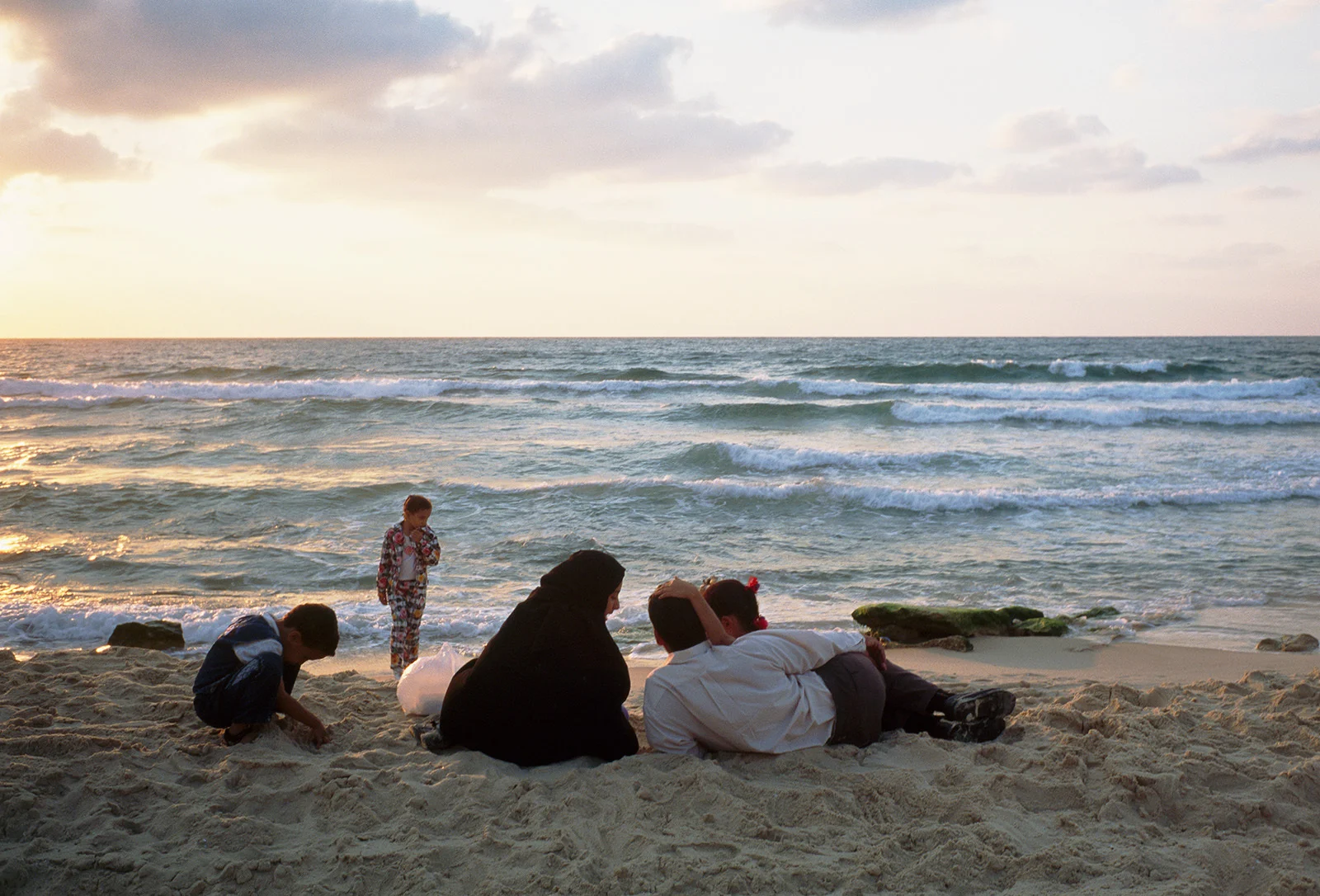
Today, people in the West Bank are living through another period of fragmentation. Three-quarters of those living in the West Bank have close relatives in other governorates. A quarter of parents said their children have never met close relatives who live in other parts of the West Bank. A generation is being locked in: Nearly a third of people under the age of 25 say they’ve never even left their own governorate.
In response to WIRED’s questions, the Israeli Military said, “Decisions regarding the placement of roadblocks, their opening or closing, are made in accordance with operational situation assessments and security considerations alone.” It is a policy that is “continuously adjusted according to the situational assessment on the ground, while balancing the residents’ ability to move freely throughout the area and security needs.”
In a letter addressed to Israel’s Central Command and top military officials, as reported by the newspaper Haaretz in June, the legal adviser to the Israeli military, Colonel Cobi Marcus, advised that the current system of checkpoints and movement obstacles has intensified beyond any legal justification. Haaretz reported he “warned” that since October 2023, the proliferation of movement restrictions, imposed on residents without authorization, may violate basic rights and the principles of international law.
Rema Hammami, an anthropologist at Birzeit University who has researched checkpoints, calls the current situation unprecedented. “Every single community, village, every single Palestinian city is going to be a separate prison. And if there’s no pushback on it, they’re just going to keep going forward with it.”
There have been military checkpoints in other parts of the world, like Sri Lanka and Iraq. But Hammami says nowhere compares to the “density, scope, and comprehensiveness” of the system in the West Bank.
A Family Split
Route 60 was part of Reem Yassin’s life for six years. It’s the West Bank’s central highway and the main road connecting Ramallah, the West Bank’s political hub, with Nablus, the commercial center of the north.
Yassin was the senior resident anesthesiologist at An-Najah National University Hospital, a leading medical facility in Nablus, which is 45 kilometers away from her home in Ramallah, in the central West Bank.
Yassin says the drive took her around 40 minutes in 2020, when she began her residency—an annoying but manageable commute. After October 2023, the Israeli military erected an additional three checkpoints on the most direct route between Ramallah and Nablus, and she says existing checkpoints began to close far more frequently.
When she gave birth to her first daughter, Yara, she would drop the baby off at her parents house in ’Asirah al-Qibliyah, a village south of Nablus, which meant she had to pass through a different checkpoint, Al-Muraba’ah, off Route 60.
Data analysis shows that since October 2023, Al-Muraba’ah has been one of the most congested checkpoints in the West Bank, often becoming a chokepoint as other routes into Nablus were closed. It would routinely take drivers 20 to 30 minutes to cross, but delays of several hours weren’t uncommon.
To make it work, Yassin would pack the night before, like she was catching a long flight: snacks, a breast pump, clothes for herself and for Yara. She would leave the Ramallah apartment in the dark, before 6 am, to drop Yara in ‘Asirah before crossing Al-Muraba’ah.
“I didn’t have a life anymore,” she says. “I’d go to work and see my daughter for an hour at night. The rest of the time was at the checkpoint.” She is one of a third of West Bank parents who say that checkpoints regularly prevent them from seeing their children during their waking hours.
The patterns are unpredictable. One moment, cars pass the checkpoint without much delay; at another, it can take hours. Events that should have little bearing on West Bank mobility can suddenly trigger a lockdown. On June 13 and 14, 2025, when Israel began bombing Iran, about 70 percent of checkpoints were suddenly closed, according to our analysis of Telegram data, an almost 350 percent increase from the week before.
Alexandra Rijke, a cultural geographer who spent years researching checkpoints in the West Bank, calls unpredictability one of the occupation’s core mechanisms. Not knowing whether you can go to work or school, or what will get you punished, has a huge impact on people’s lives. “Arbitrariness is incredibly violent,” she said.
Yassin follows a protocol for crossing. Windows down before the soldiers ask. Then the script, which she can recite: “Hand over your ID. Where are you going, where are you coming from, what do you do?” Sometimes the soldier holds his phone up close and takes photos of her face with her ID and license plate. One time, she said, a soldier leaned in through the window: “You’re beautiful,” he said.
She often saw men pressed face-down against the hoods of their cars, hands behind their backs, the soldiers shouting. Sometimes, on her way back, the same men are still detained.
When asked, nearly two-thirds of people say humiliation or fear most characterize their feeling about checkpoints. Of people stopped at a checkpoint in the last six months, nearly 40 percent said their vehicle was searched by a soldier, and more than 20 percent said they were physically searched. About one in seven said a soldier had pointed a gun toward them.
Eventually, even dropping her daughter off in the morning stopped making sense. Yassin began staying at her parents’ house near Nablus most nights. Her husband Montasir stayed in Ramallah and visited on some weekends. He usually left them Saturday morning, before the settler traffic on Route 60 picked up and checkpoints got worse.
As Yara grew older, she began to ask questions. When she opened her eyes in the morning, she’d ask: “Mama, why didn’t you take us to Baba?” Then, because she already knew the answer, she’d say, “Is the road closed?”
In the end, the checkpoints proved too great a barrier for Yassin too. The move to her parents’ wasn’t enough. She was still losing hours at the checkpoint. After her second child was born earlier this year, Yassin decided not to go back to work. She extended her maternity leave and was weighing what comes next: a pause, a position closer to home if she can find one, perhaps something abroad. “I can’t do it again,” she said. Since then, Yassin has left her job at the hospital.
Deadly Delays
In the summer of July 2024, a young man from Reem Yassin’s village was shot by Israeli forces in the leg. The injury itself was not life threatening. But after soldiers held his ambulance at a checkpoint for almost an hour, he entered severe hemorrhagic shock, Yassin recalled.
Yassin, who was completing part of her medical residency at Rafidia Surgical Hospital in Nablus, was the doctor who received him. Recognized immediately by his family, she worked to stabilize him as his blood pressure plunged.
“We almost lost him,” Yassin recalls. “We had to keep pumping blood into him.” He survived, luckily, but his situation is far from unique: Nearly two-thirds of people in the West Bank say checkpoints have been a barrier to their access to medical care.
Between October 2023 and August 2026, the Palestine Red Crescent Society (PRCS) documented 237 access denials and 240 mission delays by Israeli forces. In early 2026, incidents included soldiers detaining a medical crew at the Sarra checkpoint, soldiers throwing an ambulance crew’s keys down a mountainside at Huwwara, and a Palestinian woman in labor being transferred between vehicles across locked gates. (In response to questions on medical delays, the Israeli Military said, “In accordance with international law, the IDF allows freedom of movement for medical vehicles, including ambulances, for the purpose of providing medical treatment and evacuating the wounded.”)
These delays carry fatal consequences. The Red Crescent attributes 25 deaths since 2023 to the obstruction of its medical teams. In July 2026, a Palestinian infant, Ahmad Zaid, died after Israeli soldiers at a checkpoint blocked the vehicle transporting him for more than an hour.
In response, the Red Crescent has begun bringing facilities to the people, building makeshift medical points inside villages since ambulances are now so often delayed and cannot reliably access hospitals. Doctors Without Borders (MSF) also started providing first aid training to medical and nonmedical volunteers so they can respond to urgent medical needs in cases when an ambulance is delayed or stopped at a checkpoint.
Sleeping at the Factory
After October 2023, delay times at checkpoints across Nablus spiked to levels beyond anywhere else in the West Bank. Commuters in Nablus spent an average of nearly an hour and 50 minutes avoiding checkpoints. Ali Haj Ali has worked at Sama Pharmaceuticals, a medicine factory east of Nablus city, for over a decade; now, at 37, he supervises the maintenance of the company’s production lines. When he leaves at the end of his shift at 4:30 pm, he has stopped expecting to reach his home before 8:00 pm, even though it’s only 16 kilometers away.
Some nights, he doesn’t get home at all. He sleeps at the factory, in an arrangement Sama built during Covid-19: Two offices hold a bed and a dozen mattresses for whoever can’t make the trip home.
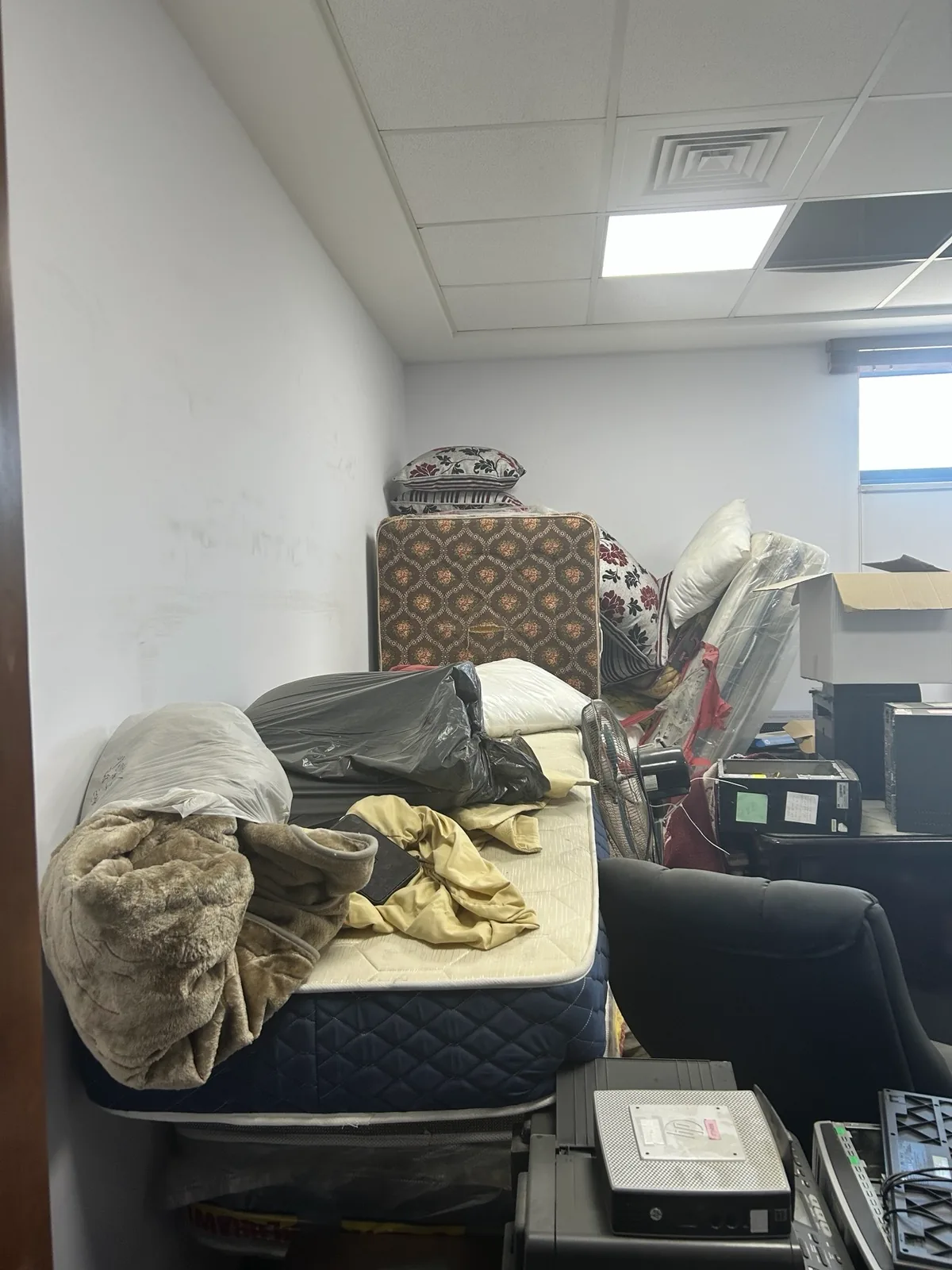
“My three kids, my wife, my mother, my father, I’d barely see them,” he said. “And forget about seeing friends.” But this is the best job he thinks he can find, so he keeps going.
On a recent afternoon, Ali sat in a room at Sama Pharmaceuticals, along with his colleague, Ohood Khatatbeh. In minutes, they were filling in the details for one another, recounting what they call “Nablus’ checkpoint crisis” in 2024 and 2025. Ali would sometimes reach the checkpoint, sit there for hours, then just turn around and go home.
“Nothing is guaranteed, that’s just how it is here. It’s like a lottery,” Ali said.
Ohood, the factory’s quality assurance manager, is 38 years old, and the mother of three sons. Her town, Beit Furik, is southeast of Nablus. It has a single gate, in or out. Her whole day is dictated by that gate.
The town has had to come up with its own protocol, as Ohood calls it: For every three private cars, one shared taxi gets through. What they cannot control is the pace, interrupted by the soldiers’ change of shifts.
Best case, if the Beit Furik gate is open and traffic is moving freely, the drive home can take 15 minutes. But for a year and a half, it routinely took her more than 5 hours daily. On the worst day, it took 10 hours. In 2024, Ohood’s teenage son had finished a final exam in biology at his school in Nablus just before she was finishing her shift. They found each other at the Beit Furik gate at 4:30 pm, in a line that packed the road several cars wide, all heading for the single entrance to a town of almost 16,000.
Ohood and her son waited in line together until 3 am the following morning.
“The regular employee, the one not separated from work by a checkpoint,” she said, “would be home, eaten, showered, asleep, and already dreaming, while I’m still at the checkpoint.”
Across the West Bank, checkpoints have begun to reshape how businesses like Sama operate. The company has started rejecting highly qualified candidates after assessing the checkpoints they would have to cross to get to work, Ohood said. It’s even started writing it into the job postings, as a requirement: Candidates must live in Nablus. About half of people polled said checkpoints have impacted their or their spouse’s ability to get a job.
In late 2025, Ohood’s one-week-old baby, Aws, came down with jaundice. She and her husband drove him out of town to the hospital. But on the way back, as she remembers it, they found the soldier already closing the gate.
“Go back,” the soldier yelled in Arabic from the other side of the gate in Beit Furik.
“Go back where?” her husband asked. “We have a sick child with us.”
The soldier raised his rifle and pointed it toward them. “For God’s sake,” Ohood told her husband, “let’s just go back.” He tried once more anyway, offering to turn around himself if the soldier would just let Ohood and the baby cross the gate on foot. The soldier lost his temper. “I’ll shoot you,” he said.
They turned around, the baby crying in their arms, and waited in line for an hour and a half until the soldier opened the gate again.
A Different World
By 2000, Aref Jaber says every road in and out of the Jaber neighborhood in Hebron, named after his family, was sealed with earth mounds and concrete slabs. By 2010, he says, iron gates were installed and checkpoints were manned by soldiers. Three years ago, new closures were installed on the very entrances to people’s homes, and iron fencing was wrapped around the gates so no one could squeeze through.
The neighborhood sits between the Ibrahimi Mosque, the settlement outposts in the old city in Hebron, and the Kiryat Arba settlement, and has only one way in or out: a turnstile, an inspection room with digital scanning, a metal gate, and a military watchtower, called Checkpoint 160. It’s “as if we’re entering another country,” Jaber says of crossing it. Except the country on the other side is his own house.
For months after October 2023, Israeli forces imposed a curfew on the neighborhood every night, from 10 to 7 in the morning. Now it’s every weekend, Aref said. From Friday afternoon until Sunday morning, the checkpoint is closed. No one in, no one out. Jaber says the people who die on Sundays are lucky, because you can bury them the same day. Die on a Saturday, and there is nothing to be done until the checkpoint opens again.
The Palestinians in the neighborhood need to wait for Israeli approval for things big and small: whether they want to evacuate a patient, hold a funeral, or bring in a canister of cooking gas. Locals cross the checkpoint on foot and climb the hill, carrying the sick, carrying groceries up to the neighborhood, dragging suitcases down toward the checkpoint. Jaber’s 6-year-old grandson should be able to go to the school 50 meters away. But it now sits behind an earth mound wrapped in barbed wire, and reaching it would mean a three-kilometer detour on foot, along settler-dominated roads. Jaber waves at his cousins, who live behind the same earth mound. “They have a whole different life there,” he says. “We’re in the closed zone.”
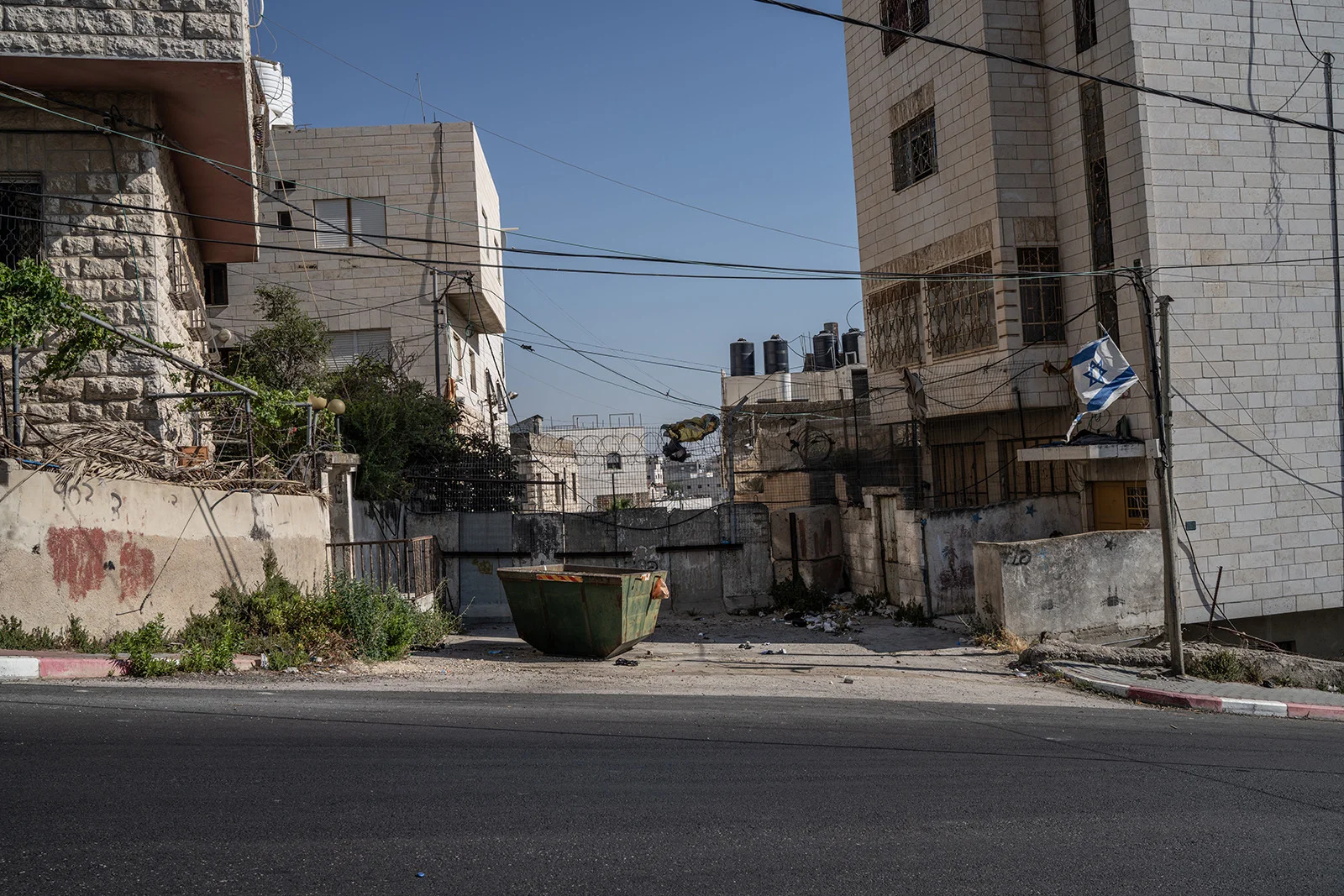
Even amid the unrelenting pressure of apartheid, people can still imagine a different life. On January 6, 2026, at around 3:00 pm, a Palestinian driver approached Wadi an-Nar, the checkpoint controlling the only road linking the north of the occupied West Bank to the south since 2000. He noticed something strange. No soldiers stood in the way. The checkpoint was open. He took out his phone, recorded a twenty-second video, and posted it in a local Telegram channel.
Within the hour, the clip spread through the West Bank. Everyone was confused. Did Israel remove its checkpoints? Was this really happening?
At 5:57, admins of the “Road Conditions” Telegram group were joking about crossing checkpoints off their lists.
At 6:10, the admins posted that the soldiers had returned. At 6:12, they said the gates were shut.
There was never an explanation. Some assumed it was a drill for Israeli forces. Others, simply a change of shifts. But for three hours, people allowed themselves to imagine a West Bank without checkpoints. A West Bank you can drive the full length of, 130 kilometers from north to south, in less than two hours.
And for a moment, they inhabited a world where they could plan the next day, the next hour. Where Amal’s daughters would reach their lecture halls in minutes. Where Reem wouldn’t have to give up a job to keep her family together. Where Ali would walk through his front door before his son fell asleep. Where Ohood would take her baby to the hospital without a rifle raised at her. Where, perhaps, you just keep driving: to Haifa, to Gaza, anywhere you want.
And Aref Jaber would walk down his own street, past the ladders he no longer needs. He would open his front door, and be home.
Story by Lama Rabah, Sabrina Slipchenko, Charles Boutaud, Firas Tawil, Elena DeBre.
Illustration by Hokyoung Kim.
Design by Sam O’Keeffe, Ben Hinks, and Alyssa Walker (WIRED), and Divya Ribeiro and Aman Bhargava (Revisual Labs).
Photo editing by Maïa Booker and Paloma Shutes.
Web development by Sam O’Keeffe.
Fact checking: Ethar AlAzem (ARIJ), Matt Giles, and Dania Suleman (WIRED).
Edited and produced by Seth Freed Wessler, Hoda Osman, Ariadne Papagapitos, Henriette Chacar, Reyhan Harmanci, and Eva Constantaras.
This story was produced in partnership with the Palestine Reporting Lab, Arab Reporters for Investigative Journalism (ARIJ), Lighthouse Reports, and Evident.

