

Today March 6, Ghana celebrates its independence day.
Ghana gained independence through a combination of political activism, negotiations, and nonviolent resistance.
This historic event marked the end of the colonial era in Ghana and was a significant moment in the broader movement for decolonization across Africa. Kwame Nkrumah, a key figure in the independence movement, became Ghana’s first Prime Minister and later its first President.
The country’s independence paved the way for the establishment of self-governance and the development of a sovereign nation.
The anniversary of Ghana’s independence is celebrated annually on March 6th as Ghana’s Independence Day.
Ghana’s journey to independence was fueled by the rise of nationalist movements and political activism.
Leaders such as Kwame Nkrumah, J.B. Danquah, and others played crucial roles in advocating for self-determination and an end to colonial rule.
The formation of political parties, such as the United Gold Coast Convention (UGCC) in 1947, marked a significant step in the organized push for independence.
The UGCC initially sought constitutional reform within the framework of British colonial rule. However, when their demands for self-governance were not met, the leadership split, and Kwame Nkrumah formed the Convention People’s Party (CPP) in 1949, advocating for complete independence.
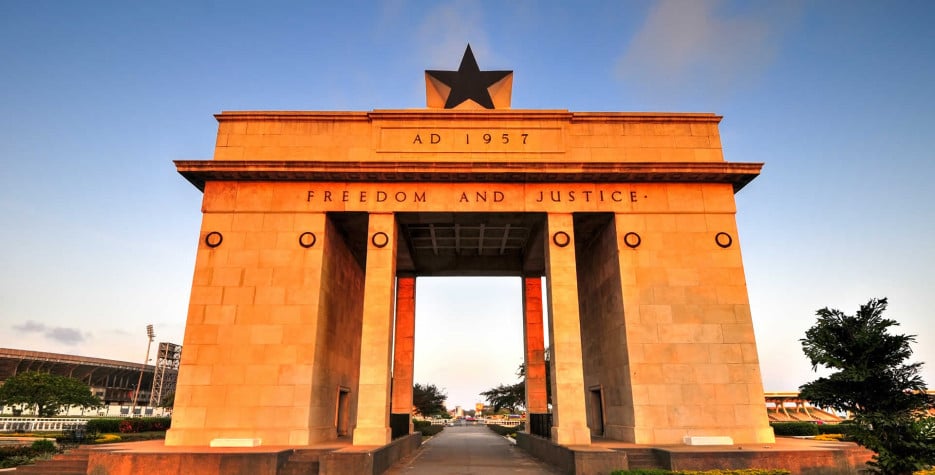
Nonviolent protests and demonstrations became a powerful tool in the struggle for independence.
The people of the Gold Coast (now Ghana) engaged in strikes, boycotts, and mass rallies to express their desire for self-rule.
The 1948 Accra riots and the subsequent unrest prompted the British colonial authorities to reassess their approach. The incidents led to increased international attention on the Gold Coast’s quest for independence.
In response to the unrest, the British appointed the Watson Commission in 1948 to investigate the situation and recommend a course of action. The commission’s report acknowledged the desire for self-government and paved the way for constitutional changes.
In 1951, the British implemented a new constitution that allowed for a degree of self-government with an elected assembly.
Kwame Nkrumah’s CPP won the elections, and he became the Prime Minister in 1952.
The final steps towards full independence were taken, and on March 6, 1957, Ghana became the first sub-Saharan African nation to gain independence from colonial rule.
Kwame Nkrumah became the country’s first Prime Minister and later its first President.
Ghana’s successful struggle for independence served as an inspiration for other African nations in their quest for self-determination during the broader wave of decolonization across the continent.
After 67 years since gaining independence, Ghana has made significant strides, yet there exists untapped potential for further reforms to fortify its democratic institutions.
Despite progress, a considerable number of Ghanaians still await the economic empowerment promised by independence.
Youth unemployment poses a persistent threat to the nation’s security, leading many young individuals to believe that their aspirations can only be fulfilled abroad.
The unfulfilled promises of independence persist as long as opportunities and supportive environments remain scarce.
The trajectory of Ghana’s future hinges on visionary and accountable leadership. The responsibility, however, falls on the shoulders of the younger generation to actively demand such leadership.
Following independence, Ghana faced a tumultuous period marked by corruption, coups, military rule, political turbulence, and persistent mismanagement.
After President Kwame Nkrumah, it took many years for the nation to find a leader capable of steering it away from these challenges.
In the midst of these difficulties, the late Jerry John Rawlings emerged onto the political stage with charisma and determination. Prior to his arrival, Ghana was characterized by a one-party system.
Rawlings pledged to bring an end to these issues, advocating for the empowerment of the people to choose their leaders.
This commitment materialized in the birth of a new constitution in 1992, which endorsed a multi-party democratic system.
Since then, Ghana has enjoyed political stability, earning recognition as the second most peaceful country in Africa.

