

Elaine Filpo was 13 when her family got its first Dell computer. It stayed in the family room, where everyone took turns, until her mom let her move it into her bedroom. It was a mistake.
Filpo spent nights downloading music from LimeWire, “praying I didn’t accidentally give the family computer 37 viruses.” The rest of her time, she went on AOL Instant Messenger as SexyButterfly305, a name she still cringes at. The 305 was her Miami area code.
“Why were we putting our location and our teenage hormones directly into our screen names?” she asked.
By 17, she was on Myspace, where she saw a guy with a very good profile picture. He turned out to be even cuter in person, which she found out because she gave him her home address and got in his car.
“No location sharing,” she said. “No Find My iPhone. No sending his license plate to the group chat. No Googling him beforehand. Just vibes.”
They went to Taco Bell and a movie. He drove her home and nothing happened. “I don’t remember thinking, ‘What if this guy is dangerous? What if he’s lying about who he is? What if something happens to me?’” she said.
Being watched didn’t help. Steven Morgan had the family computer in the dining room, in plain view of anyone walking past.
“My parents didn’t know what I was doing, and they did not care to ask,” he said. “I was able to use the internet at my own will.”
They believed the internet was “just like an encyclopedia, but with email.” The only household rule was “don’t tie up the telephone line after 10.”
Morgan had one rule of his own. “I was careful not to ever reveal my actual location or school, but I knew kids who did,” he said.
It nearly failed once. At 15, in a chatroom called NYC_Teens, a woman told him she was a model in California. She asked for his address so she could send him something, and he typed out his street name before his gut stopped him.
His father walked past mid-conversation and asked if he’d done his homework. “He didn’t pay attention to the screen,” Morgan said. “He didn’t ask who I was talking to. I still remember that.”
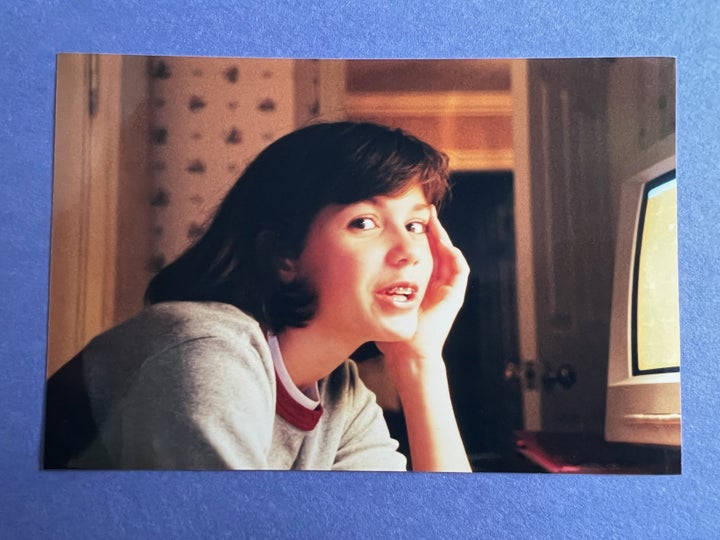
bgwalker via Getty Images
Some kids were the ones doing the lying. Paul DeMott spent every night in an AOL chatroom telling a girl he was a 17-year-old skater from California. He was 14 and had never left Ohio.
His mother saw him chatting once and he told her, “She’s a friend from school.” When the girl asked where to send a birthday card, he gave her his address. “She was a nice girl, so I didn’t feel like something was wrong,” he said.
His father took the delivery while DeMott was at school. The card read “I love you, Paul. Happy birthday,” signed Britney Mason. Demott said his father “knew all my classmates’ names for some reason,” and none was Britney, “so he confiscated the computer and placed it in his room.”
The kids weren’t always teens. Steven Lowell was out of college and teaching his parents how the internet worked. “They either could not believe what was going on or they just figured it was a fad that would go away soon,” he said. He was playing global Quake tournaments for money. “I never saw who I was playing against,” he said. “And they had my bank account number.”
At 23, he agreed to meet a woman from an AOL chatroom at a bar in New York. “Honestly, I was scared to death just showing up,” he said. She was twice his age, he said, and wanted a city hall marriage so she could stay in the country. He chatted for a while, went home and blocked her.
JD Alewine had a computer in his own bedroom, “all to myself,” and one word for the rules that came with it: “zero.” He was 13.
“Luckily, I had my wits about me and never did anything harmful,” he said, “but still, having access to something like that, at such a young age, is wild.”
None of it looked reckless at the time. “Those of us who grew up in the ’70s and ’80s were often told to go outside, play all day and come home for dinner,” said Adria Hagg, a licensed clinical social worker. “In some ways, childhood was the Wild West. So when the internet arrived, the lack of supervision online wasn’t completely out of step with how kids were being raised offline.”
“There is something psychologically valuable about having room to make small mistakes, read people, get uncomfortable and figure out what to do next,” Hagg said.
The kids in these stories have children of their own now, and rules to go with them. Morgan’s children will not have devices in their bedrooms, and have access to “no social media until high school, and then only with the agreement that I can view whatever I want.”
DeMott’s toddler daughter “will not have the same freedom as I did when I was younger, and that is intentional.” Alewine has a 5-month-old son and plans to be “a very watchful presence with his online activity once he is old enough.”
“Having the technology to monitor everything doesn’t necessarily mean psychologically we should,” Hagg said. “The better question is: Are we gradually giving children more freedom as they demonstrate that they can handle it? Ultimately, we want kids to develop judgment that works when we’re not watching.”
“There is no way I would give my kids the amount of freedom my parents gave to me,” Filpo said.
But would she teleport back for five minutes, just to hear the dial-up tone one more time?
“Absolutely,” she said.

