

This Fourth of July weekend, Taylor Swift is expected to marry football player Travis Kelce, and people are willing to bet millions on who will be there and where exactly it will take place.
Prediction markets like Polymarket and Kalshi work by letting people bet on “event contracts,” or wagers on whether an outcome will occur. On Polymarket, people can bet on the date of Swift’s wedding or whether she will be pregnant before her marriage. In this way, these prediction markets are harnessing how well people think they know the famous singer-songwriter.
On Kalshi, over $5.2 million has been traded so far on Swift wedding-related markets, including if she will wear a Dior wedding dress, if Justin Trudeau will attend, or if Selena Gomez will be her bridesmaid. The largest volume of bets is on the wedding’s location, with New York in a wide lead over Rhode Island.
There are three times more female traders in these markets compared to others, according to Kalshi. “Taylor and Travis’ wedding is a tentpole cultural event that so many of her fans are excited about. Trading on predictions related to the event or looking at the data allows fans to feel like they’re getting a front row seat to the action,” Kalshi said in a statement.
(Kalshi states that what it facilitates is not “betting,” but “trading” — because trades are made against other people, not against a house like a casino. Several federal lawsuits against Kalshi dispute this.)
But when people wager large amounts of money on a celebrity’s personal behaviors and movements, there are unintended consequences — and they’re not just financial, experts warn.
Your Brain On Celebrity Bets
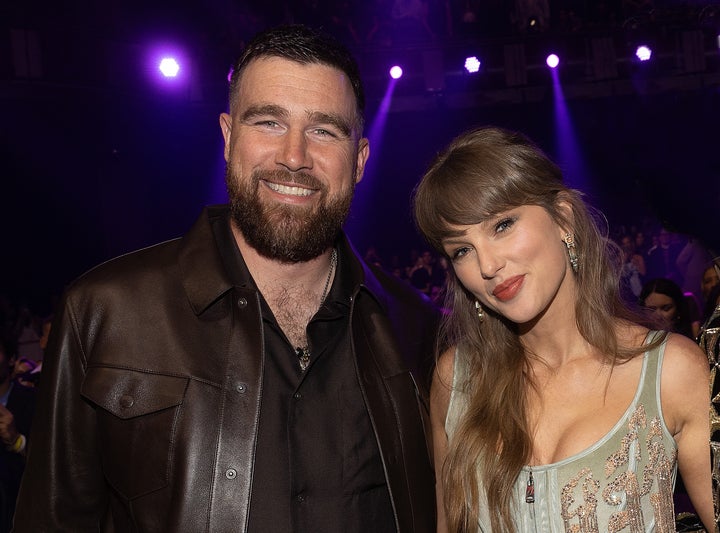
Christopher Polk via Getty Images
Shira Gabriel, a University of Buffalo psychology researcher, studies parasocial relationships people have with someone they don’t know, and finds that they can be healthy and beneficial. When a Swiftie goes to Swift’s concert or watches her videos, they may feel genuine care and connection for the famous musician, and that helps bolster their wellbeing and decompress after a long day, Gabriel said.
But those same benefits are lost when details of Swift’s life become a “yes” resolution and a payout.
“What worries me about it is that there’s something dehumanizing about it,” Gabriel said. “The more that people are betting on little aspects of someone’s life, the less that person seems like an actual human being, and the more they feel like a commodity, and that’s very different than paying to go to someone’s concert or getting T-shirts of them.”
“You’re putting yourself at risk, not only for disappointment and losing money, but also for losing that bond, for getting to a place where it’s no longer a parasocial bond, but it is a transactional connection,” Gabriel said.
And what you’re willing to wager on can cross appropriate boundaries, said certified financial planner and money psychology expert Hanna Horvath.
On Polymarket, users have bet over $2 million on whether the singer will be pregnant by the end of the year. Horvath said the Polymarket bets related to how soon Swift will get pregnant are “super gross.”
“You’re putting a price on someone’s intimate life decisions,” she said. “I think it’s worth thinking about the golden rule: ‘Would you want somebody to do this for you?’”
HuffPost asked Kalshi and Polymarket about the critique that allowing trades on Swift’s details of personal life and wedding is dehumanizing. Kalshi stated that “Taylor is a public figure of major interest, and her decisions have a major economic impact.” Polymarket stated that it is providing “a real-time read on what participants expect will happen next, from major world events to the moments that dominate the public conversation, providing a transparent window into what the world collectively believes.”
And beyond losing your love for Swift, you could also lose large sums of money. Just because someone may win big this week doesn’t mean you will. “The people who are benefiting from these platforms are people that have access to that insider information,” Horvath said. “I truly believe you should go into prediction markets just assuming that money is gone.” When one user made well-timed prediction-market bets on Swift’s engagement to Kelce one day before it actually happened, people suspected the anonymous bettor had acted with inside knowledge.
Wagering On Swift’s Personal Life Will Change Your Fandom For Good
If a celebrity “lets you down because they didn’t get married on the day that you thought, or have the bridesmaid you thought, or get pregnant quickly enough,” Gabriel said, it can spark negative feelings towards this famous person. You may no longer feel supported by Swift, but betrayed. You might even lash out.
“There’s an incentive to harass them more because you want a certain outcome, and you might have the ability to get that outcome,” Gabriel said. “Dehumanization is one of the key ways that we justify aggressive behavior towards other human beings.”
This backlash has already happened. In March, an Israeli journalist got death threats and harassment from bettors on Polymarket, pressuring him to change his reporting for their payout related to the Iran War.
Feeling connected to Swift can be a helpful part of your life. But she has set limits of what she wants fans to guess about her. “No, you can’t come to the wedding,” Swift said on her 2024 song “But Daddy I Love Him.” In a New York Times interview, she said it’s “weird” when fans do “detective work, figure out the details — ‘Who is that about? What is this?’” in her songs.
Gabriel said it’s fine to cash in on your knowledge of Swift to make wagers on where she will get married. “If you’re like, ‘Oh, I’m sure this is happening in Rhode Island,’ and you place a bet on it, it doesn’t make you a bad person,” she said.
“But if you get wrapped up and get angry because someone isn’t making the kind of decisions that you predict that they will, then it might be time to sort of step back,” Gabriel continued. “You don’t want to give other people that kind of power over your happiness.”

