

On Wednesday, Apple introduced a new way for its upcoming technology to listen in on people’s conversations.
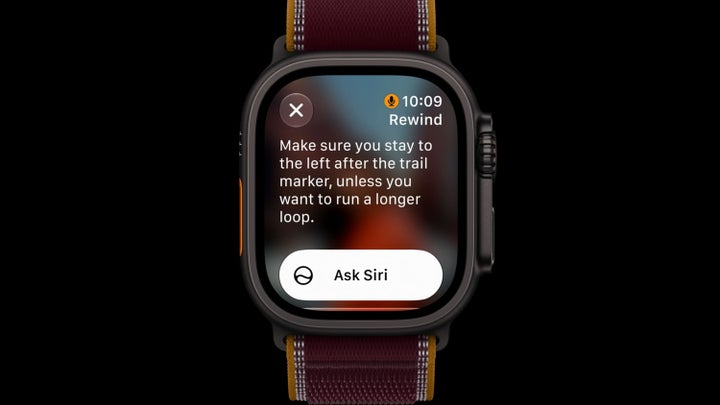
The tech giant’s latest Apple Watch Series 12 and Apple Watch Ultra 4 will include a “Live Rewind” feature powered by “audio intelligence” gathered by the watches’ microphones. When users opt in, Live Rewind recalls what was said in the last 15 seconds by showing a text snippet on an Apple Watch after users double-press the round button on the side of their watch. This way, “you can catch something you missed,” Apple explained in its post about the new feature.
In the Apple video demonstration, we see someone use Live Rewind to recall the daily menu specials a waitress is listing.
Once turned on, Live Rewind will alert people that it is in use with a chime and a microphone icon and an animation will display on the screen. A text snippet of the last 15 seconds of conversation will then appear for the Apple Watch user. Apple says it doesn’t create or store audio recordings from what it transcribes, and its transcription doesn’t note who is speaking.
Some people appeared excited by this feature, with one person on X writing, “Never losing an argument again.”
It’s not the only listening feature that the company is rolling out for new Apple Watches. The “Siri Recap” feature will also generate “high-level summaries of conversations that users can review later to jog their memory,” Apple stated.
But even though Apple says it does not create or store recordings with Siri Recap or Live Rewind, there could be legal and privacy risks if you use this feature in your next chat with a friend or colleague, experts warn.
There could be legal risks with listening in on someone, even when there’s just a transcript.
Doing this may be legally risky, lawyers warned. Donna Ballman, a recently retired Florida-based employment attorney, said that Apple’s new feature is a “gray area that will almost certainly be the subject of lots of litigation.” Ballman suggested that people interested in this feature should explicitly ask: “Do you mind if I record this conversation?”
Ryan Stygar, an employment attorney and author of the book, “Get It in Writing: The Ultimate Guide to Your Rights at Work,” said it’s a “shaky foundation” to rely on Apple’s audio and visual cues as meaningful consent.
When you are in public spaces, you don’t have a reasonable expectation of privacy and may be secretly recorded, but in private spaces where you do have an expectation of privacy, this is unlawful, Stygar noted, citing a California law that prohibits using an electronic device to “eavesdrop upon” a confidential communication without consent.
“A chime and a red recording light could help, but typically, you want unambiguous consent from all parties,” he said.
Every state has different laws on whether you can record someone without their consent, and certain states require everyone’s consent. Stygar said people should assume you need the other person’s consent if you’re in an all-party consent jurisdiction such as California, Illinois, Florida or Pennsylvania.
“I don’t think creating a transcript instead of an audio file creates an exception to two-party consent requirements,” Stygar noted, citing California’s penal code, which regulates the content, not the format of a recording.
Monitoring what someone says can come off as creepy.
Even if you can legally use Apple’s Live Rewind feature, should you? Many users have expressed concerns about the feature, calling it an “invasion of privacy” and “spying.”
“Whether this is legal depends on technical interpretations of varying state eavesdropping laws, but the bigger issue is how this works in practice and whether it violates basic social contracts,” said Thorin Klosowski, a security and privacy activist for the Electronic Frontier Foundation.
Apple has not responded to HuffPost’s questions about the privacy critiques. In its blog post about the feature, the company advises users to be mindful of when to turn Audio Intelligence features on: “While audio is not recorded and stored, and no speakers are attributed, consider those around you where conversations might be private or sensitive.” Apple states it will omit sensitive information like your financial data from its Siri Recaps.
But when a device can eavesdrop on what’s being said, it can have more serious consequences than just getting to see a transcript of what you want to order at a restaurant.
Take Meta, which has faced blowback for its AI-powered eyewear. Service workers have reported being harassed and creeped out by Meta’s glasses that can easily film them in their workplace.
In this way, Apple’s Live Rewind introduces another way people are being monitored without their consent, privacy experts warn.
“While specific speakers may not be logged, people don’t really have a practical means to consent or decline recording,” Klosowski said. “Apple and other tech companies have unilaterally decided that everyone should accept always-on monitoring of our conversations.”

